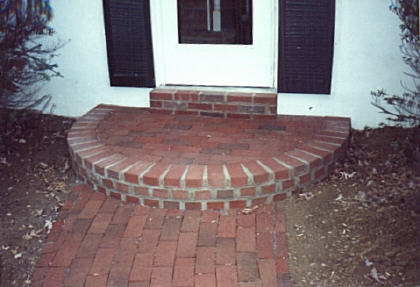
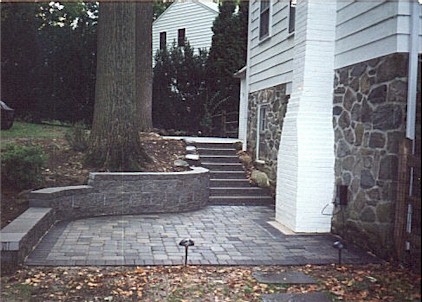
We can construct steps and landings with many different materials. The height and length of the hill is measured to determine the number of steps, the height of each riser, and the length of each tread. Steps can be constructed with brick or flagstone on a concrete and cinder block foundation for steps that should last for generations. Bricks and flagstone as well as various colored bullnose pavers and different textured concrete wall caps could be used as treads on segmental retaining wall risers. These steps are constructed on a 6-inch base of compacted crushed stone, and at least 8-inches of wall stones below grade, but they do not require a concrete foundation so they are more economical than masonry steps. Examples of this type of step construction can be seen on our Step Construction page. More economically still are steps with tie risers; these could also have a tread of brick, flagstone, or concrete pavers inside and behind the tie risers. Please see examples below of steps constructed with interlocking paving (Segmental Retaining Wall) stones, flagstone, ties and brick. All steps shown were constructed by Robert J. Kleinberg Landscape Design and Construction. Additional examples of each type can be seen by clicking on the links below:
Paver (Segmental Retaining Wall) Steps
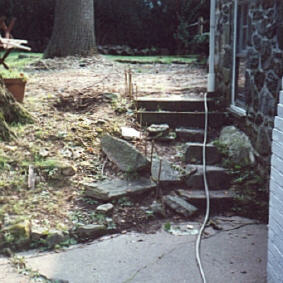
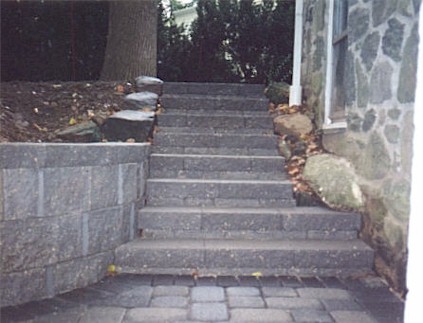
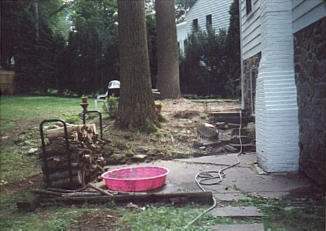
E. P. Henry StoneWall Select Steps – Villanova, Delaware County, PA 19085
-

- Before
-

- After
-

- Before
-

- After
E. P. Henry Dakota Blend Terrace Wall Steps – Wynnewood, Montgomery County, PA 19096
-

- Before
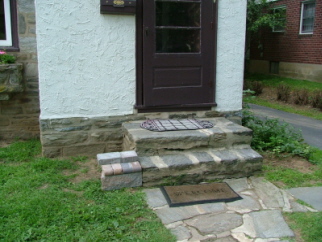
-
- After
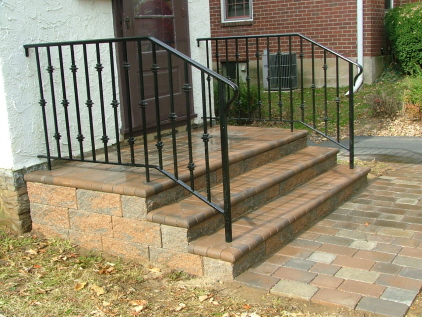
To see construction detail for these steps, click here Step Construction page.
Flagstone and Bluestone Steps
Flagstone and bluestone steps can be constructed with various different risers and various shades of gray. Flagstone / Bluestone masonry steps must be constructed on a concrete footer below the frost line. Flagstone or Bluestone treads could be used as treads on segmental retaining wall risers for a more economical flagstone or bluestone step. Flagstone or Bluestone could be used as a veneer over concrete steps that are in sound shape and can allow for the extra 2-inches that the flagstone or bluestone veneer will add. Solid one piece flagstone, bluestone, or other natural stone blocks or treads 6-in. thick can be installed as complete steps. Flagstone and Bluestone can also be used inside tie riser as treads or landings inside the ties.
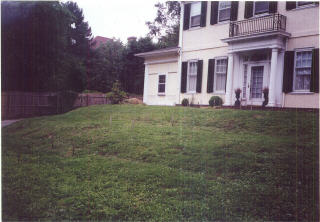
Masonry Flagstone Steps – Merion, Montgomery County, Main Line, PA 19066
Shown below are flagstone / bluestone steps with solid treads mortared onto risers constructed with tumbled flagstone wall stone over cinder blocks and a concrete footer, and brick cheek walls. Flagstone / Bluestone masonry steps must be constructed on a concrete footer below the frost line which can add significantly to the cost, but constructed properly masonry steps can last for centuries.
-

- Before
-
- After

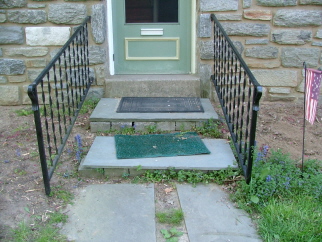
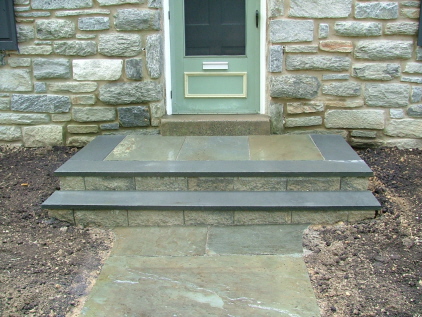
Bluestone Treads On Pewter Blend Terrace Wall Risers – Swarthmore, Delaware County, PA 19081
Flagstone / Bluestone treads could be used as treads on segmental retaining wall risers for a more economical bluestone step. Steps are constructed on a 6-inch base of compacted crushed stone, and at least 8-inches of wall stones below grade, but they do not require a concrete foundation so they are more economical than masonry steps. Flagstone / Bluestone treads are installed with Segmental retaining wall adhesive.
-
- Before
-
- After
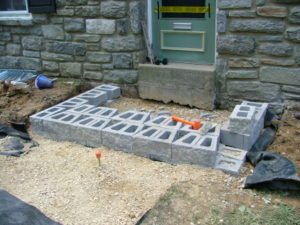
Terrace Wall step and landing during construction
Solid Flagstone / Bluestone and Natural Stone Blocks
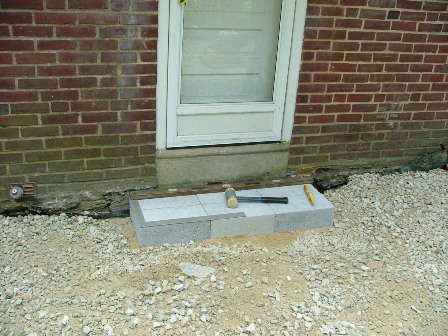
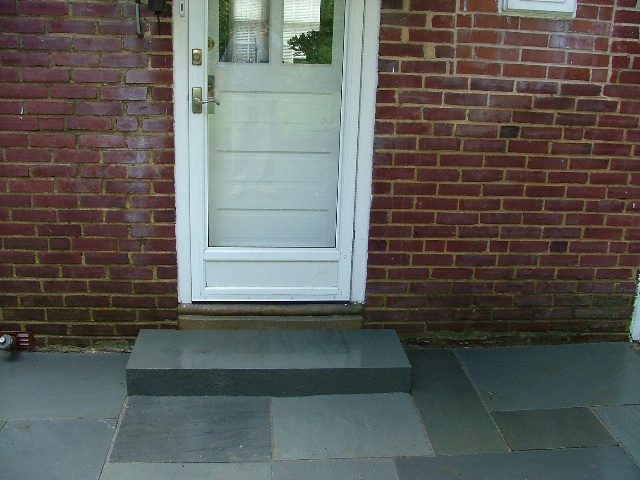
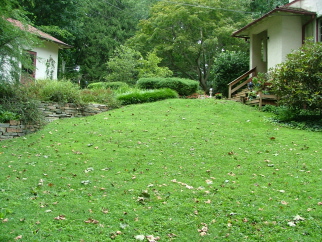
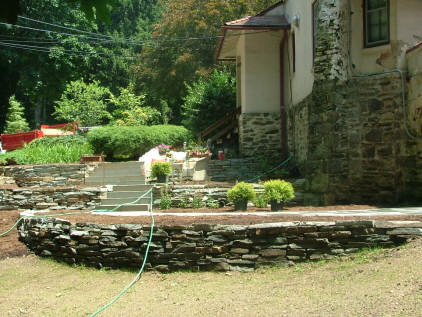
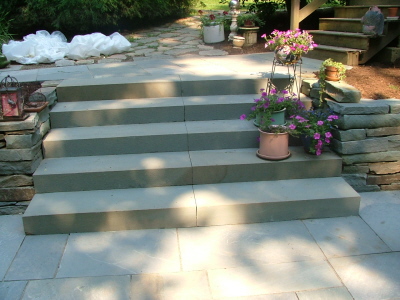
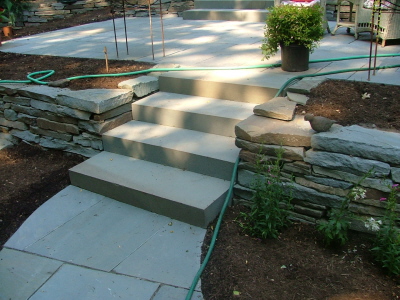
Flagstone, Bluestone, and Solid Stone Blocks 6-in. thick can be installed as complete steps. These treads in the two jobs below were installed with the same technique as Segmental Retaining wall steps. A 6-in. modified stone base was installed and compacted for each tread and 6-in. solid cinder blocks were installed below grade on this base. Flagstone / Bluestone treads 6-in. thick were installed on the blocks with retaining wall adhesive.
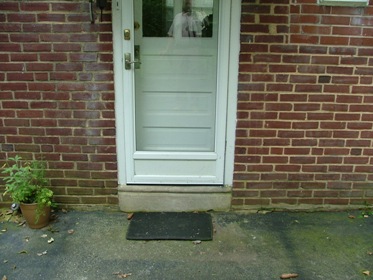
Solid Block 6-in. Thick Bluestone Step – Swarthmore, Delaware County, PA 19081
4-ft. Wide Step with construction of base shown.
-
- Before:
-
- Base Construction Shown:
-
- After:
Solid Bluestone Steps – Rose Valley, Delaware County, PA 19063
8-ft. Wide Upper Steps & 4-ft. Wide Lower Steps
-
- Before:
-
- After From Bottom:
-
- Close-up of 8-ft. long steps:
-
- Close-up of 4-ft. long steps:
Flagstone or Bluestone Veneer Steps
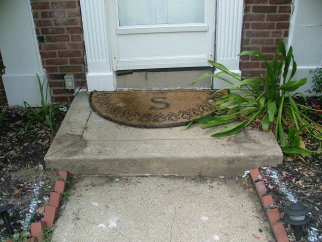
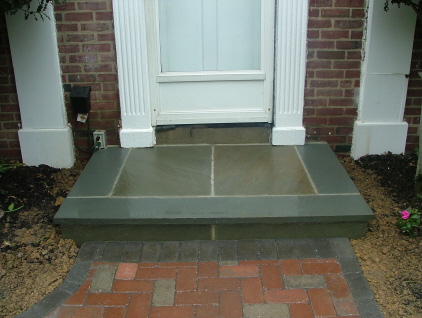
Flagstone and bluestone can be used as a veneer over concrete steps that are in sound shape and can allow for the extra 2-inches that the flagstone veneer will add. It is an economical way of incorporating bluestone into a project. Since the existing steps do not have to be removed and the footers are already in place they are more economical than other types of flagstone steps. The veneer will add about 2-inches to the top and bottom step.
Bluestone Tread Veneer with Flagstone Veneer Interior – Havertown, Delaware County, PA 19083
-
- Before:
-

- After:
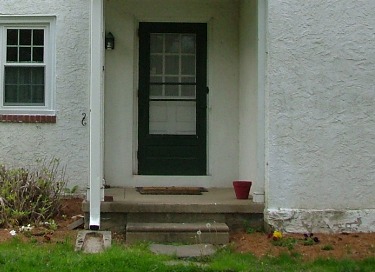
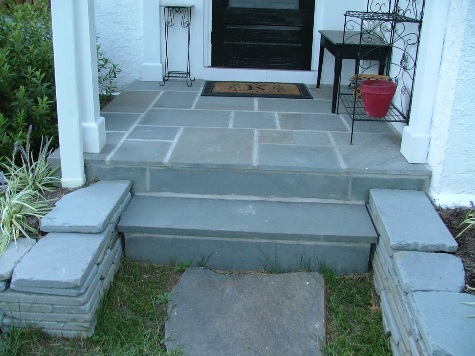
Bluestone & Flagstone Veneer – Newtown Square, Delaware County, PA 19073
The front and top of the lower step is veneered with one piece of Bluestone tread. The sides and top of the landing is veneered with full range thermal flagstone. Lower wall is constructed with tumbled bluestone laid dry. This job is located at my home and office in Newtown Square, PA
-

- Before:
-
- After:
Tie Steps
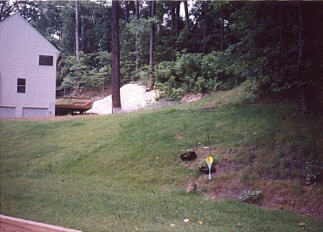
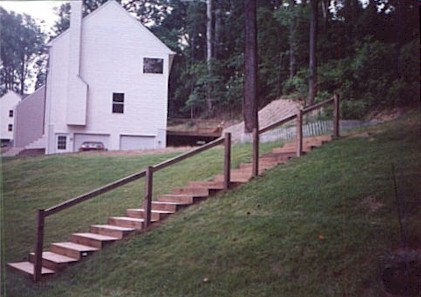
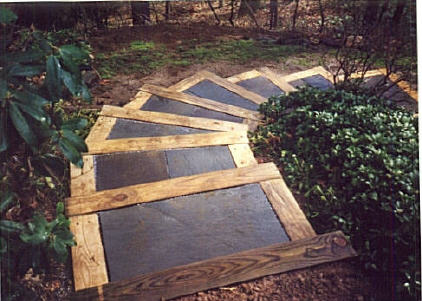
Pressure treated softwood ties can also be used to make nice steps with either six or eight inch risers. Ties can also be combined with brick or flagstone as the tread. Ties are anchored to the ground with 2-foot reinforcing rods and are nailed together with 60-penny nails. Ties from lower steps extend under upper step but no additional foundation is used so these step are the most economical. You can see more examples of tie steps on our Tie Steps Page
Tie Steps – Media, Delaware County, PA 19063
-
- Before:
-

- After:
Tie and Flagstone Steps – Newtown Square, PA 19073
-

- After From Top:
-

- Before From Top:

Brick Steps
Brick Steps – Lower Merion, Montgomery County, PA 19096
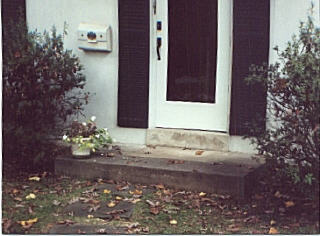
Brick steps can be constructed on a concrete and cinder block foundation, or more economically with tie risers. Shown below are brick steps mortared onto a cinder block foundation. You can see more examples of brick steps on our Brick Steps Page
-

- Before:
-

- After: